Flemish Baroque painters trained under or influenced directly by Peter Paul Rubens, known for dynamic composition, rich color, and emotionally expressive devotional subjects.
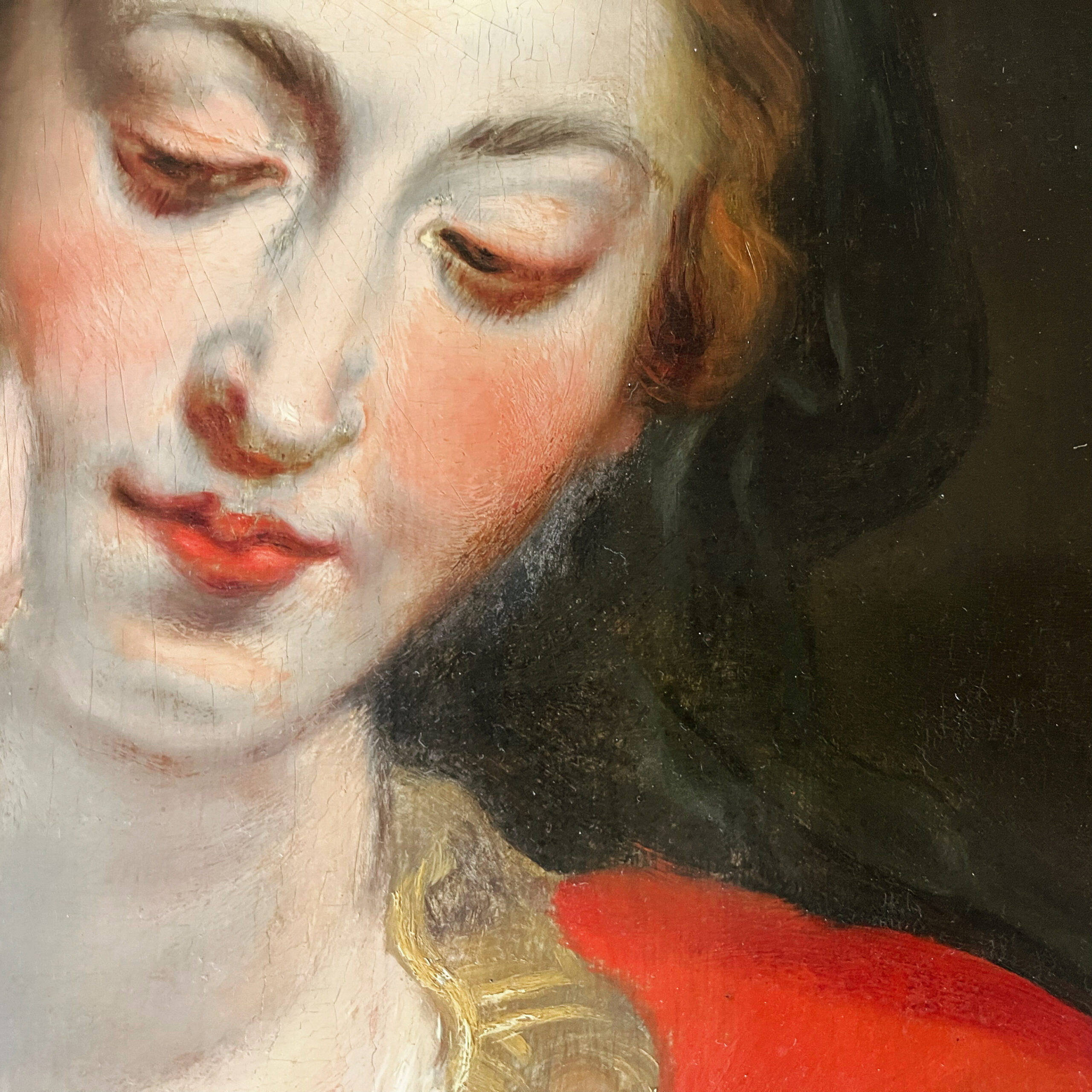
Works from the School of Rubens typically exhibit rich surface texture, visible layering in flesh tones, and strong contrasts of light and shadow. Age-related craquelure is common, as are cradled supports for stability. Brushwork varies from broad, energetic strokes to fine detailing in eyes, hair, and drapery—reflecting training grounded in Flemish Baroque techniques.
A Baroque-period copy after Peter Paul Rubens, Madonna and Child presents the Virgin Mary and Christ Child in an intimate and tender moment. Rubens often presented the Madonna not as an abstract holy figure, but as a very human and intimate mother, connecting divine love with earthly emotion. The representation is tender, physical, and emotionally rich, aiming to engage the viewer in a direct, almost theatrical way, which was one of Rubens’ key strategies.
The bond between mother and child here was meant to inspire piety, drawing together the symbol of the Virgin as a spiritual mother with that of a paradigm of purity and divine grace. Christ is depicted as both God and human, revealed in his physical, vulnerable body.
The artist’s rendering is confident and fluent, suggesting a skilled period copyist or student of Rubens’ school. The brushwork in the hands and hair is energetic and layered, giving texture and movement. The fine detail around the eyes, lips, and fabric shows a close study of Rubens’ original and technique, likely from someone trained in a studio environment and familiar with Flemish Baroque painting. The hands are especially noteworthy; robust, fleshy, and expressive, reflecting study of human anatomy.
Fine craquelure and period cradling on the reverse affirm the work’s age and period of production, while the closeness in style to Rubens’ original shows this as the work of a very skilled follower. This painting was likely created for devotional purposes, possibly for a private chapel or noble home of the time, to aid reflection and prayer.