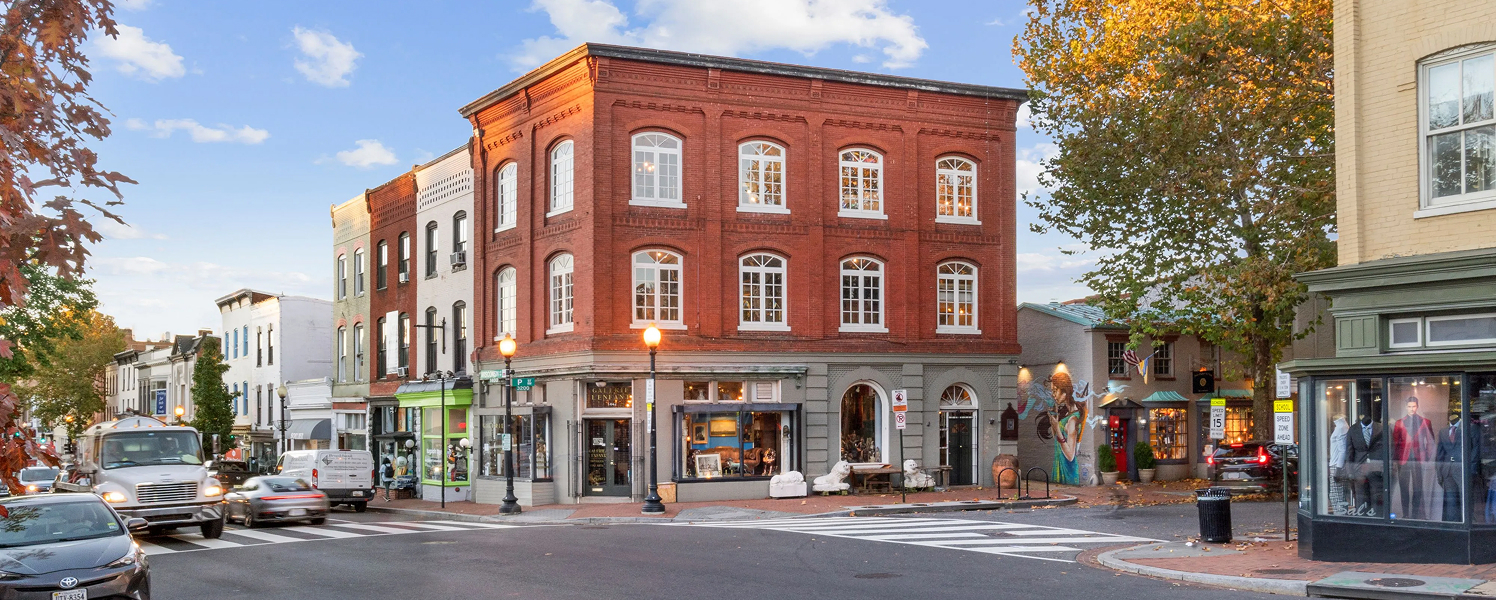
Peter Colasante has been in the art business in DC since 1973 and after over half a century in business has decided to join the World Wide Web. His current home is L’Enfant Gallery which has inhabited the post federal corner mansion of 1442 Wisconsin in Georgetown since 2000.
His story is one of fifty years of buying and selling art to Georgetowners, the diplomatic elite, and to the travellers and explorers who happened upon his doorstep.
Here we tell how a legacy business from a past age is still going strong and adapting to the brave new world. Welcome to our website.
The longer story of L’Enfant Gallery is below for those who are sitting comfortably.
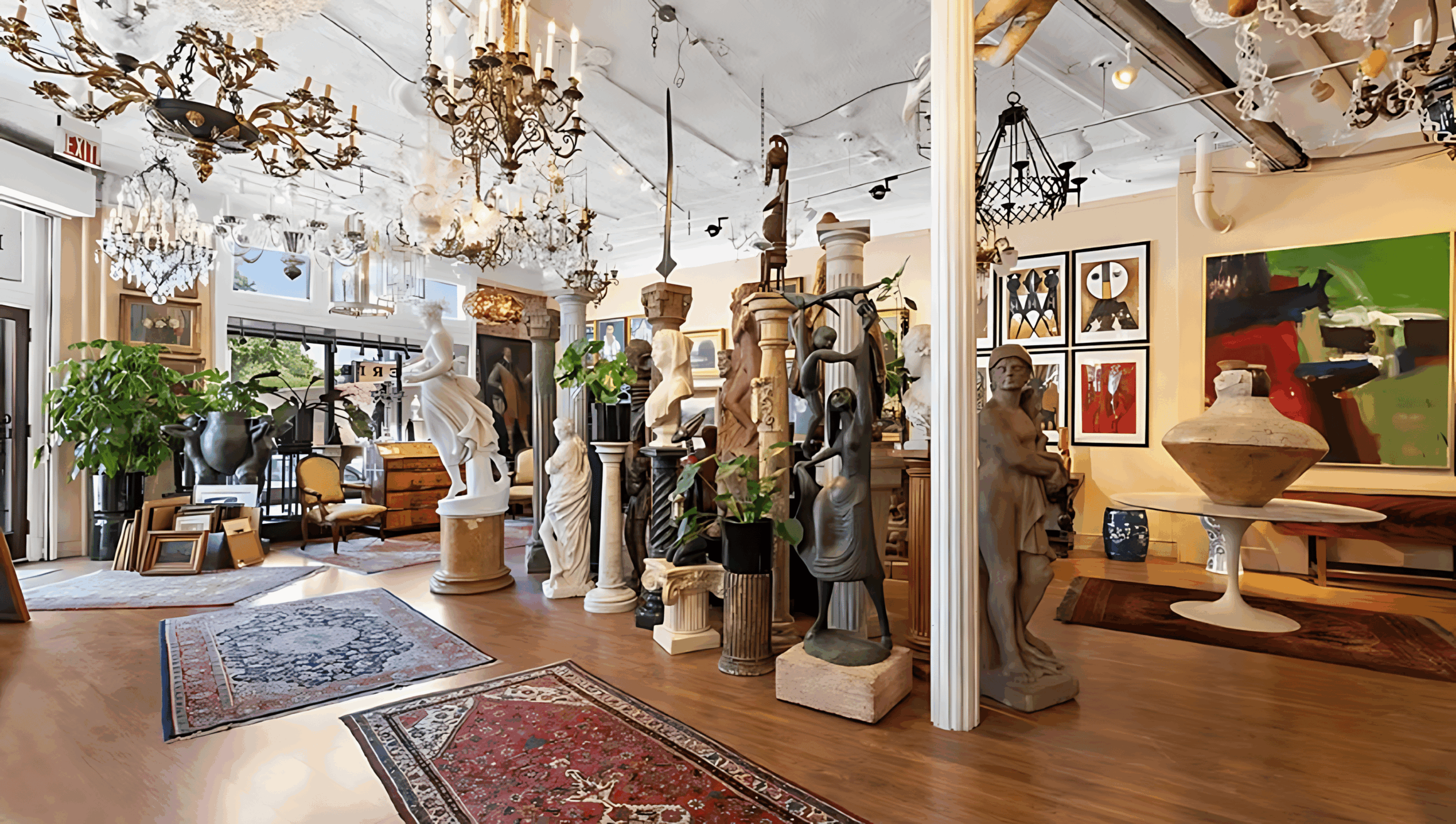
L’Enfant Gallery presents to its visitors a diverse and meticulously curated collection, encompassing a wide range of fine art and antiques spanning centuries. From historical paintings and sculptures to exquisite furniture and decorative objects, our gallery showcases exceptional pieces that demonstrate the utmost artistry and craftsmanship. Whether you are a seasoned collector or a first-time visitor, we invite you to explore our gallery and discover its timeless treasures. Our team is always available to provide expert guidance, fostering a deeper connection with the art and history we represent.
The building’s design is attributed to Gustav Friebus, an accomplished architect and draftsmen active in Washington, D.C. during the Victorian period. Friebus served as Draftsman on the completion of the State, War, and Navy Building and the Washington Monument. He was later appointed Chief Architect of the Bureau of Indian Affairs, supervising design of agency and school buildings nationwide. In private practice, Friebus designed numerous Georgetown rowhouses and commercial façades distinguished by ornamental brickwork, segmental arches, and tall fenestration—features consistent with 1442 Wisconsin Avenue. His Georgetown work contributed to the cohesive late-Victorian fabric still visible along Wisconsin Avenue, N Street, and Prospect Street.
Period newspaper references show two O’Donnell’s Drug Stores operating in Georgetown during the late 19th – early 20th century: one at M & Wisconsin (the better-known corner location) and another near 32nd & O Streets. The confusion stems from historical naming conventions: Wisconsin Avenue was formerly called 32nd Street, and street renumbering in 1871 further complicated address continuity. It is possible that O’Donnell’s second store occupied 1442 Wisconsin, linking this building to Georgetown’s long-running pharmaceutical trade. Closure date for the O’Donnell’s location here remains unconfirmed.
In 1883, Anthony Hanlon operated a store at this address. Hanlon’s enterprise typified the expansion of small, owner-operated shops along upper Georgetown’s main commercial spine during the post-Civil War economic boom.
The structure exhibits typical late-Victorian Georgetown traits: pressed brick façade, decorative cornice, and tall, narrow upper-story windows. Its original ground-floor configuration likely featured a recessed entry flanked by large display windows—standard design for retail buildings of the 1880s. The building fits within a cohesive row of similar period storefronts that once served neighborhood residents rather than through-traffic shoppers.
O’Donnel transferred ownership in an unconventional way, as is consistent with the building’s character. Peter recounts the story here, in tandem with Jamie Peva. In summary, Mrs. Babushania’s family had come over from Armenia to Virginia Beach with pockets filled with jewels. When the Great Depression struck, the Babushania’s were forced to sell their jewels in order to survive. When things were desperate, the only person that would buy things at a fair price in this area was Mr. Pompolonia, from Pompolonia Jewelers. The family organized a trip to Washington and met with Mr. Pompolonia, who gave the family spectacular news: the diamond they showed him was much more valuable than they had originally hoped, worth $25,000 as opposed to $5,000. They rejoiced and put the money in the glove department. While driving home, the Babushania’s passed 1442 Wisconsin Ave and the daughter insisted on stopping to see the inside of the beautiful building. Mr. O’Donnell welcomed them in and asked how he could assist them, prompting them to inquire about the price of the building and Mr. O’Donnell to respond that he would never sell the building and that they would have to give him $25,000 in cash right now to get him out of there. The daughter said “stay right there”, fetched the bounty from the glove department, and handed it to Mr. O’Donnell. The deed was handed over right then and there, and the Babshania’s occupied the building for the next 75 years.